



Post Date:
Oct 15, 2026
|
HITACHI After-Sales Drives Fleet Uptime
The Middle East and Africa region doesn’t make life easy for heavy equipment. Heat, dust, altitude, and abrasive conditions instantly expose weaknesses in a machine, plus downtime is never an option. For Hitachi Construction Machinery Middle East (HMEC), keeping customers productive goes beyond the equipment itself. Parts availability, technical support, and a strong dealer network are just as important as machine performance - across mining, quarrying, oil & gas, and construction applications.
HITACHI After-Sales Drives Fleet Uptime
The Middle East and Africa region doesn’t make life easy for heavy equipment. Heat, dust, altitude, and abrasive conditions instantly expose weaknesses in a machine, plus downtime is never an option. For Hitachi Construction Machinery Middle East (HMEC), keeping customers productive goes beyond the equipment itself. Parts availability, technical support, and a strong dealer network are just as important as machine performance - across mining, quarrying, oil & gas, and construction applications.
Post Date:
Oct 15, 2026
|
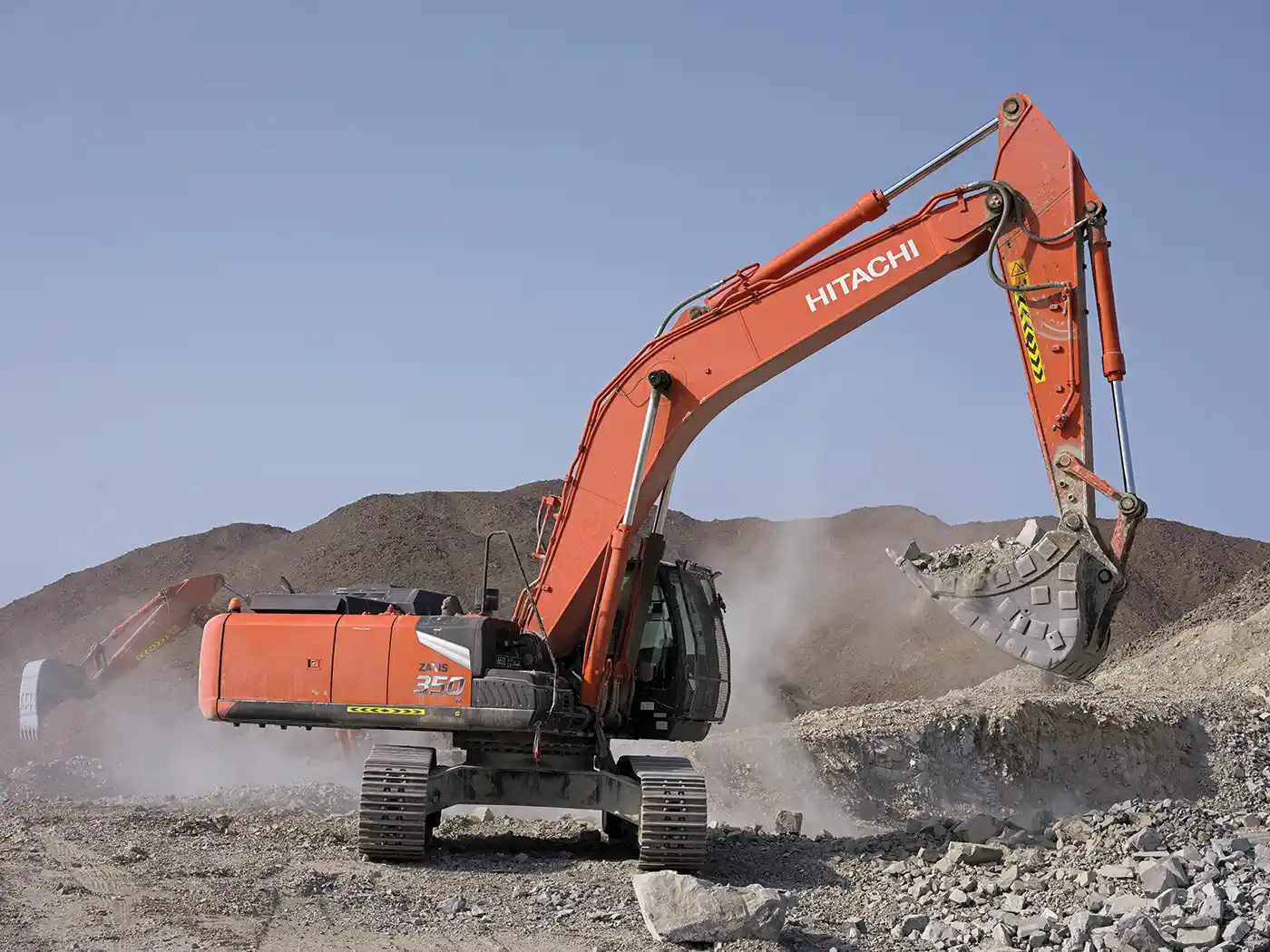
The approach is being tested across markets with very different operating conditions. Hitachi’s ZX350H-7G excavator, for example, has featured in major deliveries in Oman and Ethiopia, where the machines work in oil & gas, mining, quarrying, and other demanding applications.
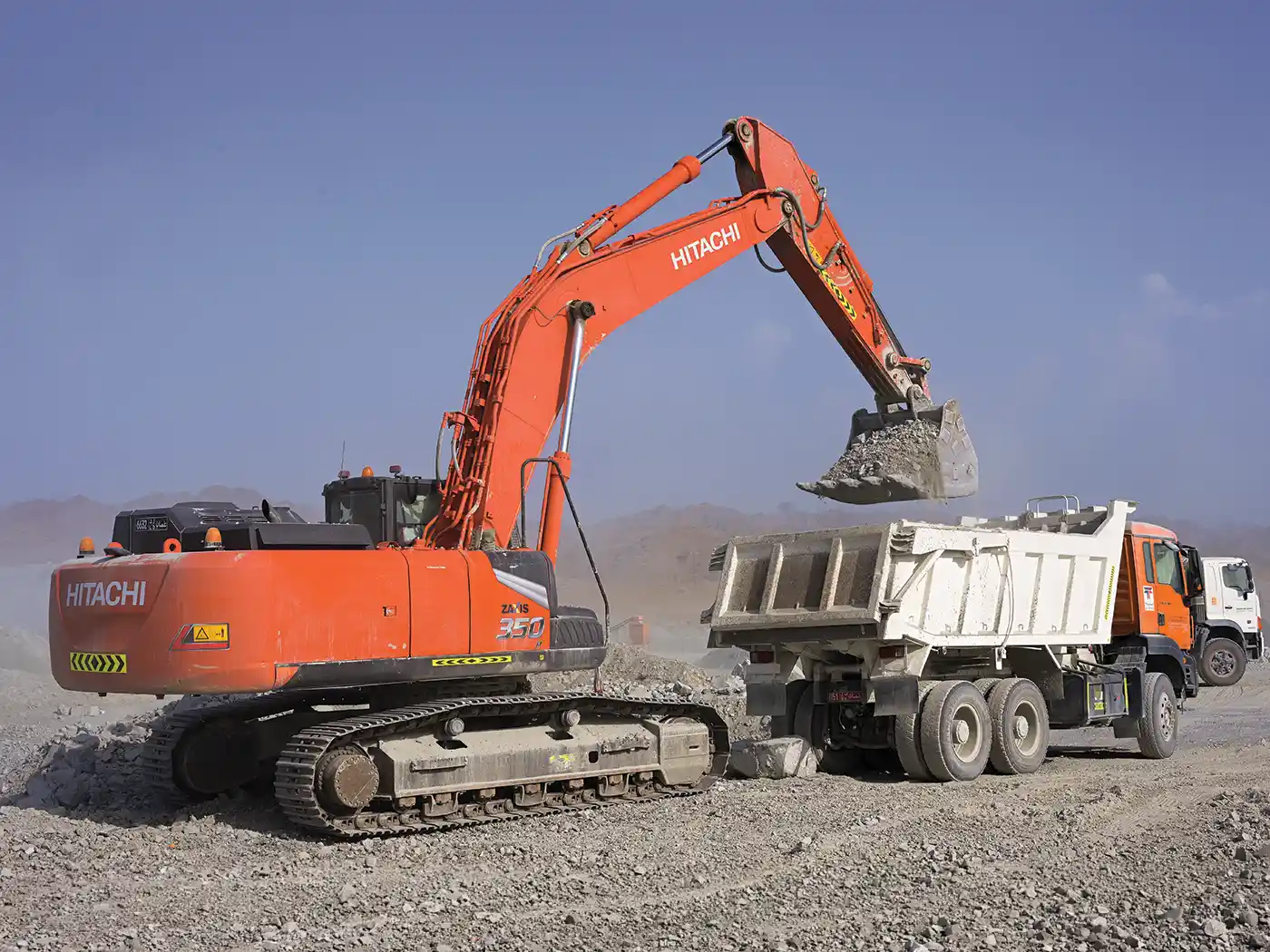
In Oman, Al Fairuz Trading & Contracting Co. LLC, (the company’s authorised distributor) delivered 14 ZX350H-7G excavators to Imtiaz Harweel Al Ahlia Co. Founded in 2015, the company’s relationship with Hitachi goes back to the company’s first year. Bakhit Nasser Musallam Amoosh Al Mahri, Chairman of Imtiaz Harweel, began his company’s operations with one Hitachi excavator in 2015. Today, the company has 21 Hitachi excavators in its fleet, with another 13 ZX350H-7G excavators on order from Al Fairuz. The reason for that continued preference is fairly direct.
“When it comes to excavators, I purchase only Hitachi due to its reliability, fuel efficiency and the excellent service and spare parts support of Al Fairuz,” says Al Mahri. He also points to the performance of the Japanese-built excavators in meeting demanding field requirements and their high resale value in Oman.
There is a useful lesson in that progression. The initial decision to buy an excavator may be based on the machine, but keeping a fleet with the same manufacturer over a period of years involves a much wider calculation. Reliability and fuel efficiency affect daily operations, while service and spare parts support become critical when the equipment is working under pressure. Resale value, meanwhile, becomes relevant further down the machine’s working life. In other words, the machine has to make sense beyond the day it is delivered.

Bakhit Nasser Musallam Amoosh Al Mahri, Chairman of Imtiaz Harweel.
Built around the conditions
Those requirements become even more pronounced when operating environments change. Across the Middle East and Africa, machines can face intense heat and dust, high-altitude sites, and abrasive quarrying conditions. Hitachi addresses these demands by engineering advanced cooling systems into the builds, integrating dust-resistant designs, fitting robust engines, and reinforcing structural frames for rugged terrain. Strict quality assurance processes and decades of field experience also form part of the approach.
There is a digital layer to that support as well. ConSite and Global e-Service provide machine data, diagnostics, and maintenance alerts, helping dealers anticipate requirements and minimise downtime.
The combination of machine design, digital monitoring, and local support has been applied across projects including rail developments in Oman and quarry and mining operations in the UAE and Saudi Arabia. But technology does not remove the need for people on the ground. If anything, the more demanding the application, the more important the connection between the machine, dealer, and customer becomes. That is particularly apparent in Ethiopia.
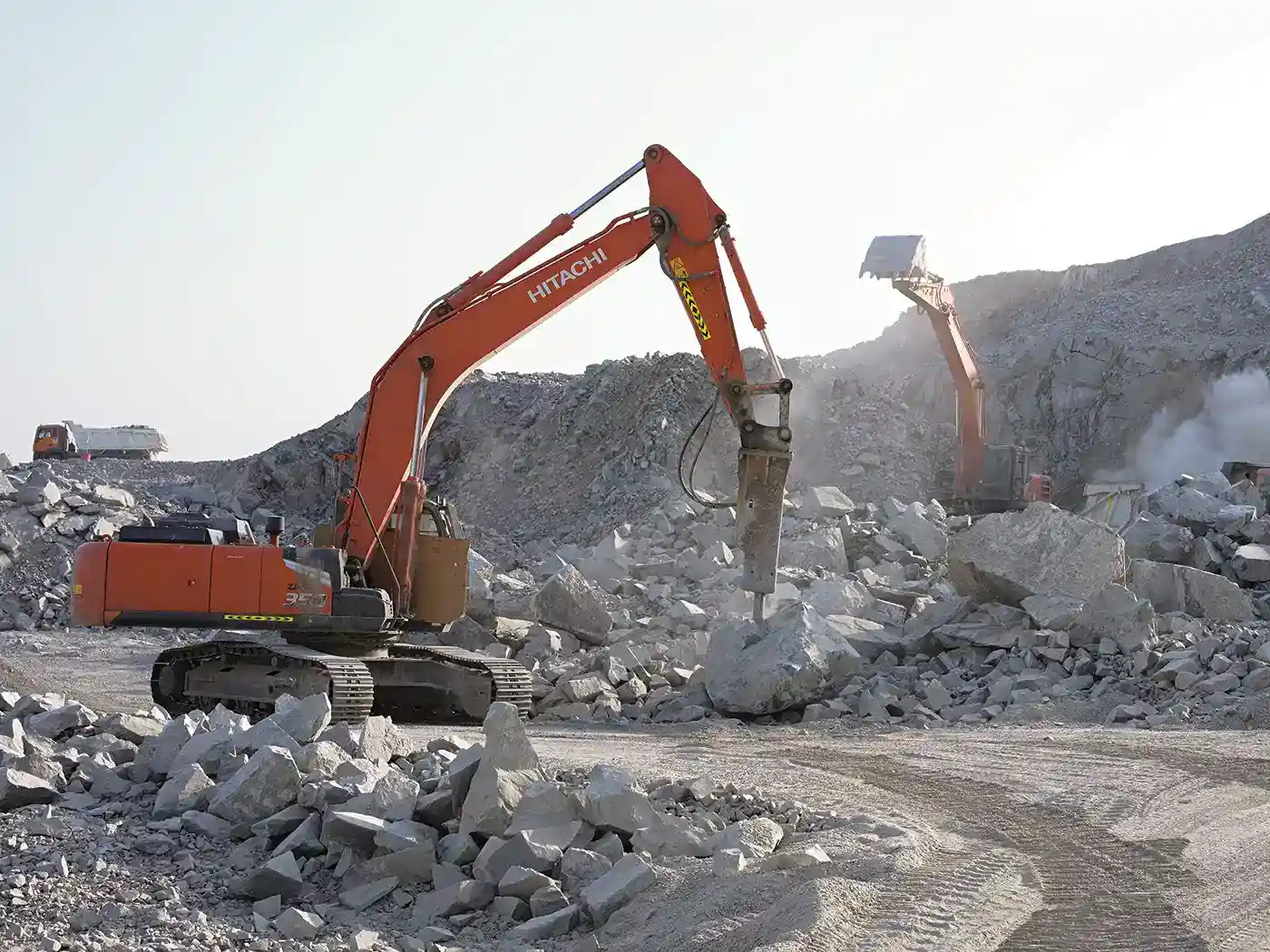
The country’s quarrying and aggregate extraction environments can involve high altitudes, abrasive volcanic rock such as basalt, and extreme dust. Hagbes PLC, the official Hitachi dealer in Ethiopia, supports customers operating in these conditions with machinery ranging from medium-duty excavators to mining-class units designed for heavy-tonnage earthmoving and aggregate loading.
The equipment itself is designed for the work. Hitachi’s ZAXIS hydraulic excavators feature reinforced booms, heavy-duty arm assemblies, and high swing torque for demanding rock applications, while HIOS hydraulic systems are designed to deliver smooth cycle speeds while optimising fuel efficiency. Yet the support infrastructure around those machines is just as important.
Hagbes operates a specialised main service centre and hub in Kality, Addis Ababa, equipped with diagnostic machinery for major overhauls and component maintenance. Regional maintenance support providers are also established in different parts of the country.
Genuine Hitachi replacement parts, filters, hydraulic components, and Ground Engaging Tools are stocked locally to reduce or eliminate customer downtime. Qualified, factory-trained engineers and mobile field units provide on-site troubleshooting and preventive maintenance, including at remote locations.
Hagbes is also authorising local sub-dealers across key regional hubs to establish authorised parts sales points and regional service centres.
The thinking is practical: a machine working far from a major centre cannot afford a support model that is equally far away.
After sales
That becomes particularly important in mining, quarrying, and oil & gas, where downtime can quickly affect production. For HMEC, parts and after-sales support are central to the customer proposition. Its regional dealer network is equipped with parts and after-sales support teams for field service, with workshops located close to machine population concentrations. OEM-coordinated training programmes are reinforced by dealer train-the-trainer managers.
Strategically located parts depots and dedicated service teams across the Middle East and Africa add another layer, while ConSite and Global e-Service help provide machine data and maintenance alerts to support proactive intervention.
The regional operation also offers a broader portfolio of solutions and support, including genuine parts, remanufactured components, extended warranties, and digital solutions such as ConSite and Global e-Service.
None of this changes the basic requirement from the customer side. When a machine stops, they want to know how quickly it can get moving again.
That is why parts availability and response timing can carry as much weight as the original equipment specification. A reliable machine is clearly important, but reliability does not eliminate the need for support; it makes having effective support available when it is needed even more valuable.
The Imtiaz Harweel experience demonstrates that relationship particularly well. The company extend beyond the machines themselves to include Al Fairuz’s service and spare parts support.
It is a similar story in Ethiopia, where workshops, regional maintenance support, genuine parts, and mobile technical teams form part of the core machinery proposition.
A market getting bigger
Saudi Arabia adds another dimension to the regional picture. The Kingdom’s mining sector is gaining momentum, and Hitachi Construction Machinery is involved in the specifications associated with new mining-related opportunities. With mining machinery already a major part of Hitachi’s global business, the development of the Saudi market creates another area of opportunity for the company.
For customers entering new mining projects, however, the requirements will extend beyond putting machines on site. Equipment will need to perform in demanding conditions and, just as importantly, have access to the parts, technical expertise, and service has continued to invest in Hitachi equipment, but its stated reasons infrastructure required to keep it productive.
That makes the development of local support networks particularly relevant as the market expands.
Hitachi’s MENA operation positions its dealer network as a key part of providing sales and product support solutions across the region, with machines intended to deliver reliable performance and cost efficiency in their specific applications, backed by international quality assurance standards.
The value is in the working life
There is an obvious temptation when buying heavy equipment to focus on the purchase itself. Price, specification, and performance naturally dominate the conversation.
But for a contractor, quarry operator, or mining company, the more important calculation continues long after the machine arrives.
How reliably does it perform? How efficiently does it consume fuel? How quickly can parts be supplied? Is technical expertise available when it is needed? And what happens to the machine’s value further down the line?
For Hitachi Construction Machinery, after-sales support, parts availability, and response timing are key to success, alongside reliable, durable, and economically efficient machinery.
The Oman example sums up that approach better than any specification sheet can. One Hitachi excavator became 21, followed by another 13 on order. That is not simply a machine purchase repeated several times; it reflects a customer’s total experience of the equipment and the support structure around it.
Across two very different markets, the same principle emerges: machines need to be built for the conditions, but the support needs to be built around the customer.
Because in an industry where productivity depends on equipment being ready to work, the sale is only one part of the story. The real test begins when the machine gets to site.