



When Diesel Costs More Than The Blueprint: How Fuel Prices Are Rewriting Africa's Construction Story
 0 likes
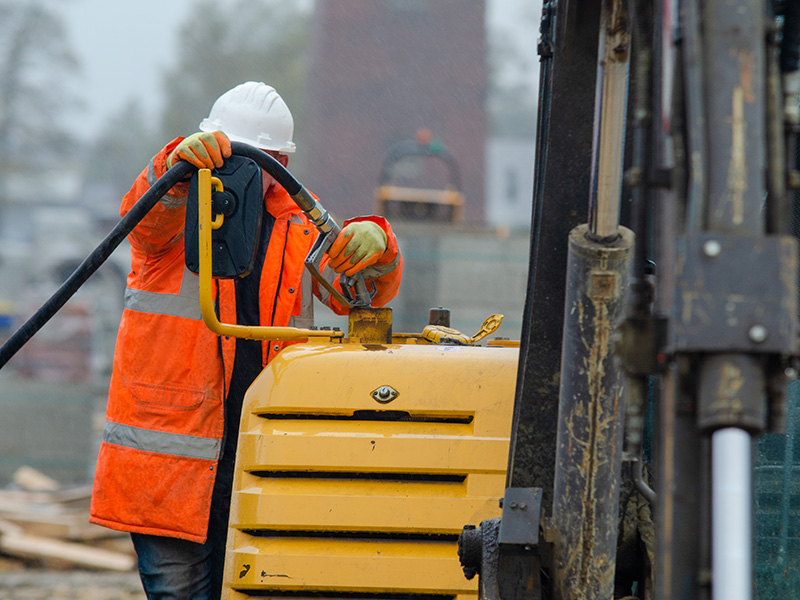
African construction sites are burning through cash faster than ever - and it's not because of inflation or supply chain snarls. It's diesel. Every excavator, dump truck, generator, and crane drinks fuel like it's going out of style, and right now, it might as well be liquid gold.
For GCC investors eyeing Africa's infrastructure boom - the ports, highways, and energy projects that feed into Vision 2030's pan-continental ambitions - this isn't just a cost problem. It's a recalibration of what's feasible, what's profitable, and who actually survives the next 24 months.
Fuel Price Trends: The Upward Climb That Won't Quit
Here's the thing: fuel prices in sub-Saharan Africa haven't just risen. They've doubled, sometimes tripled, in markets like Nigeria, Kenya, and Ghana since 2021. Subsidy removals (looking at you, Lagos), currency devaluation, and global crude price volatility created a perfect storm. In Nairobi, diesel hit 200 Kenyan shillings per litre last year - a price point that would've seemed absurd five years ago.
What most people miss here is the ripple effect. It's not just the cost per litre. It's the psychological shift. Contractors who used to estimate equipment operating costs at 15-20% of total project budgets are now staring at 30-35%. That's not a rounding error. That's a different project.
And unlike the GCC, where fuel subsidies still cushion operating costs (even post-reform), African contractors have no buffer. Every price spike hits the bottom line immediately.
Impact on Construction Projects: The Domino Effect
When fuel costs spike, construction budgets don't expand to match - they just bleed. I've seen this go wrong when developers lock in fixed-price contracts assuming stable fuel, then watch their margins evaporate six months in. The contractor eats the loss or walks. Neither outcome builds anything.
Take the Lamu Port-South Sudan-Ethiopia Transport (LAPSSET) corridor project. Kenyan contractors on segments of this mega-infrastructure play reported 40% cost overruns in 2023, with fuel cited as the primary culprit. Earthmoving equipment - dozers, graders, loaders - became cost centres instead of productivity assets.
Equipment operating costs in Africa now dictate project phasing in ways they never did before. What used to be continuous pours or 24-hour shifts now gets chunked into daylight-only operations to avoid running generators overnight. Concrete batching plants that ran diesel backups? Switched off or rescheduled entirely.
For Gulf-based contractors expanding into Africa (think Saudi Binladin Group's East African ventures or Emirati firms chasing renewable energy projects in Morocco), the lesson is brutal: your cost models from Riyadh don't travel. Fuel price assumptions built for a subsidized market collapse the moment you cross into Addis Ababa or Dar es Salaam.
Equipment Demand Changes: Adapt or Die
Contractors aren't sitting still. The smart ones are rewriting their playbooks.
Fuel efficiency is becoming the new benchmark for heavy machinery demand. New-generation excavators with 20-30% better fuel economy aren't nice-to-haves anymore; they're survival tools. Caterpillar and Komatsu reps in Johannesburg and Accra report surging interest in hybrid models and telematics systems that optimize fuel burn per hour. Machines that used to seem like overkill for African jobsites - where "good enough" often ruled - are now competitive because they sip instead of chug.
Renewable hybrids are creeping in. Solar-diesel hybrid generators appeared on projects in Kenya and Rwanda, particularly on remote sites where fuel logistics eat another 15% in transport costs. It's not widespread yet, but the economics are tilting. A solar array plus battery storage costs more upfront but kills the daily diesel bleed.
Then there's the less glamorous shift: contractors are just using less equipment. Projects that would've deployed five excavators now run three and extend timelines. Labour-intensive methods - old-school hand digging, manual compaction - are making a weird comeback on smaller projects where fuel costs dwarf labour wages.
Honestly? It feels like a step backward. But when your diesel bill rivals your payroll, the calculus changes fast.
Contractor Strategies: Survival Modes Engaged
The survivors are getting creative - sometimes ingeniously, sometimes desperately.
Dynamic pricing clauses are now standard in RFPs from savvy developers. Contracts include fuel price escalation adjusters tied to published indices, shifting risk back onto clients. GCC developers accustomed to fixed-price certainty find this uncomfortable, but African realities don't care about comfort.
Localised fuel procurement is another play. Contractors are bypassing national distributors, negotiating directly with refineries or forming fuel-buying cooperatives. In Tanzania, a consortium of mid-sized contractors pooled resources to bulk-purchase diesel, shaving 8% off retail. Small win, but it kept them solvent.
Some are rethinking equipment ownership entirely. Instead of owning fleets, contractors are leasing equipment on usage-based contracts where fuel costs are baked into the rental rate. The lessor absorbs fuel risk; the contractor gets predictable costs. It's not elegant, but it works when your balance sheet can't handle volatility.
And here's a darker truth: projects are just getting cancelled or mothballed. Mid-tier infrastructure - secondary roads, public housing, municipal works - that penciled out at $80/barrel crude doesn't close at $95. Governments (already strapped) walk away. Private developers pivot to less equipment-intensive plays.
The Gulf-Africa Construction Corridor: What This Means for Vision 2030
For GCC stakeholders, Africa was supposed to be the next frontier - the place where EXPO 2020 lessons, free zone models, and mega-project expertise could transplant and multiply. Vision 2030's African infrastructure chapter assumed African costs would stay African: cheap labour, manageable fuel, hungry markets.
Fuel prices are testing that thesis. UAE-based contractors who crushed it in Dubai or Doha are learning that African margins require African-specific strategies. You can't just export your business model and expect 18% returns.
The opportunity hasn't vanished - Africa still needs $100 billion annually in infrastructure investment just to keep pace with population growth. But the easy money phase? Over. The next wave belongs to operators who master fuel efficiency, renewable integration, and adaptive contracting, not those who assume diesel will always be an afterthought line item.
This is the recalibration. Build accordingly.
Leave a reply