



The Heavy Haulers: Ranking The Best Dump Truck Brands For Mining And Mega-Projects
 1 like
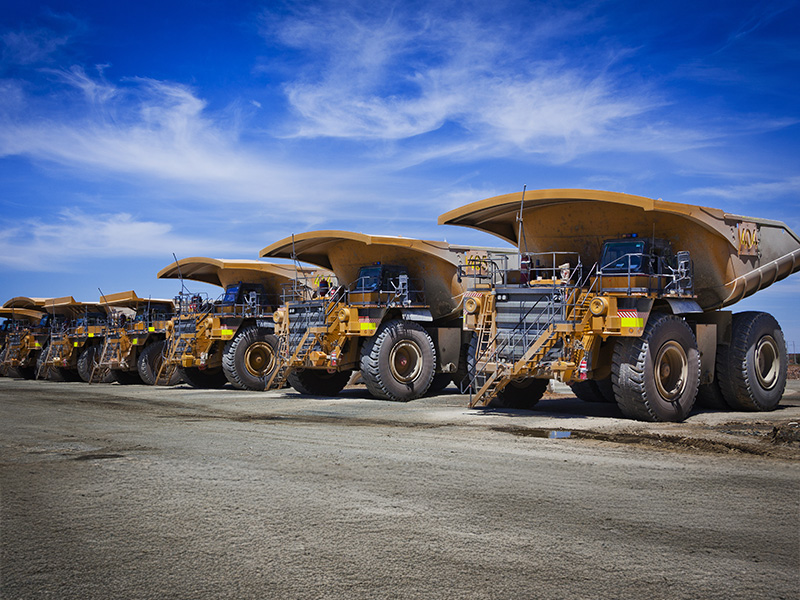
When a copper mine in Chile needs to move 400 tons of ore per load, or a highway expansion in Dubai requires fleets that won't break down in 50°C heat, the choice of dump truck brand isn't just procurement-it's strategic infrastructure. I've watched projects hemorrhage millions because someone bought the wrong iron.
Mining and large-scale construction demand machines that blur the line between vehicle and geological force. We're talking about equipment investments that can hit $5 million per unit, running 20-hour shifts in conditions that would shred a normal truck in weeks. The brands that dominate this space didn't get there by accident.
Rigid Frame vs. Articulated: Know the Battlefield First
Before diving into manufacturers, understand the two dominant architectures. Rigid dump trucks-those massive, immovable-looking beasts-reign supreme in open-pit mining. They carry stupendous payloads (we're talking 300+ tons for the largest) and work best on haul roads where maneuverability matters less than raw capacity.
Articulated dump trucks pivot in the middle. Literally. That hinge point between cab and bed transforms them for softer ground, tighter turns, and the kind of varied terrain that would bog down a rigid. If you're hunting for an articulated dump truck UAE-based operation, you're probably dealing with desert conditions or infrastructure projects where roads don't yet exist.
What Actually Matters: The Four Pillars
Payload capacity sits at the top-but it's not just maximum tonnage. It's consistent tonnage over the machine's lifespan. A truck rated for 100 tons that actually hauls 95 tons reliably for 50,000 hours beats one that hits 100 but needs rebuilds at 30,000.
Operating costs include the obvious (fuel, which we'll hit next) and the insidious: parts availability, technician training requirements, downtime frequency. A brand with stellar uptime metrics but parts that take six weeks to arrive from Germany? That's a project killer.
Fuel efficiency has become non-negotiable. Diesel costs swing wildly, and a fleet burning an extra 50 liters per truck per day adds up fast. The delta between efficient and wasteful can exceed $200,000 annually per truck.
Resale value-here's what most procurement teams miss. These machines don't depreciate linearly. Certain brands hold value because secondary markets trust their longevity. When you're liquidating assets post-project, a Caterpillar or Komatsu will move faster and command better prices than lesser-known marques.
The Top 10: Who Actually Delivers
1. Caterpillar remains the 800-pound gorilla. Their 797F hauls 400 tons-that's not a typo-and global parts networks mean repairs happen in days, not weeks. Premium pricing, but the resale numbers justify it.
2. Komatsu runs neck-and-neck with Cat in mining operations. The HD785 and HD1500 series combine Japanese manufacturing precision with payload capacities that rival anyone. Their autonomous haulage systems are legitimately years ahead.
3. Liebherr built their reputation in European mines and never stopped innovating. The T 284 carries 400 tons and boasts diesel-electric drive that cuts fuel consumption measurably. Parts cost more; reliability justifies it.
4. Hitachi (now operating under Komatsu's umbrella post-merger) still produces the EH-series beloved in Asia-Pacific operations. The EH5000 hits 300+ tons and thrives in high-altitude mining conditions.
5. Terex Trucks dominates the articulated segment. Their TA400 and TA300 models handle rough terrain better than most rigid frames handle pavement. Strong presence in Nordic mining operations.
6. Bell Equipment from South Africa deserves more recognition globally. Their B50E articulated truck excels in exactly the conditions you'd expect from a company that cut its teeth in African mining-heat, dust, minimal infrastructure.
7. Volvo Construction Equipment brings Scandinavian engineering to articulated dump trucks. The A60H balances payload (55 tons) with fuel economy that actually matters over 10,000-hour service intervals.
8. XCMG represents China's manufacturing maturity. Their XDE series offers 70-80% of premium brand performance at 50-60% of the cost. For mining trucks for sale in emerging markets, they're reshaping procurement calculus.
9. Scania might surprise you here-they're traditionally highway trucks. But their mining-spec P-series dump trucks with 8x4 configurations handle heavy duty trucks applications brilliantly in medium-scale operations.
10. BEML (Bharat Earth Movers Limited) dominates Indian mining. The BH205E might not match Caterpillar's payload, but in markets where parts logistics and local support trump maximum capacity, they're unbeatable.
Price Reality Check
Entry-level articulated trucks (30-40 ton capacity) start around $400,000. Mid-range rigid frames (100-150 tons) run $2-3 million. The monsters-300+ ton rigid frames-push $5-7 million new. What people forget: operating costs over the truck's life will exceed purchase price by 2-3x. A $500,000 cheaper truck that burns 15% more fuel and breaks down twice as often costs you millions more.
The strongest resale values cluster around Caterpillar, Komatsu, and Liebherr. They'll retain 40-50% of purchase price after eight years in hard mining service. Lesser brands might fetch 25%.
Conslusion
Look, here's the thing: brand choice matters less than operational context. A Caterpillar might be overkill for a five-year limestone quarry, while an XCMG would crater under 24/7 copper mine demands. Match the machine to the mission. Factor in local dealer networks-the best truck in the world is useless if you're waiting three months for a transmission part.
Mining demand continues climbing, particularly for metals required in battery production and renewable energy infrastructure. That means these heavy duty trucks aren't getting less important-they're becoming the unglamorous backbone of the energy transition. Choose wisely. Your project timeline depends on it.
Frequently Asked Questions
Q: What's the real-world fuel consumption difference between brands?
In controlled testing, top-tier brands like Komatsu and Caterpillar burn 15-20% less fuel than budget alternatives over equivalent payloads and distances. On a mine running 20 trucks, that differential translates to roughly $1.2 million annually at current diesel prices. The efficiency gap comes from transmission design, engine management systems, and drive train optimization-not just engine size.
Q: Should I buy rigid or articulated for a UAE desert mining operation?
For the UAE specifically, articulated wins if you're dealing with sand, dunes, or areas where haul roads aren't fully developed. The articulation point prevents bogging and maintains traction. But if you've got established hard-packed haul roads in an open-pit operation, rigid trucks offer better payload capacity and lower cost per ton moved. Most UAE operations I've consulted with run mixed fleets-rigids for main hauls, articulated for perimeter and development work.
Q: How much do operating costs really add up over a truck's lifetime?
Figure roughly $150-250 per operating hour all-in: fuel, maintenance, parts, operator wages, insurance. A mining truck running 5,000 hours annually costs $750,000 to $1.25 million per year to operate. Over a typical 12-year mine life, that's $9-15 million in operating costs per truck-making that initial $3 million purchase price look almost incidental. This is why fuel efficiency and parts availability matter more than sticker price.
Q: Do Chinese brands like XCMG actually hold up in serious mining applications?
Honestly? It depends. XCMG has made legitimate strides in the past five years. Their newer models perform adequately in coal and aggregate mining with proper maintenance schedules. But for ultra-high-intensity applications-deep hard rock mines running equipment to failure points-the premium brands still dominate. Think of XCMG as the smart choice for operations where 85% performance at 60% cost makes financial sense. For mission-critical applications where downtime costs $50,000 per hour, stick with the established names.
Leave a reply