



Post Date:
Oct 15, 2026
|
Al Faris Bets Big on Growth
Al Faris Group adds 100 hydraulic trailer axle lines to strengthen its fleet as it prepares for the GCC’s next wave of heavy transport demand.
Al Faris Bets Big on Growth
Al Faris Group adds 100 hydraulic trailer axle lines to strengthen its fleet as it prepares for the GCC’s next wave of heavy transport demand.
Post Date:
Oct 15, 2026
|
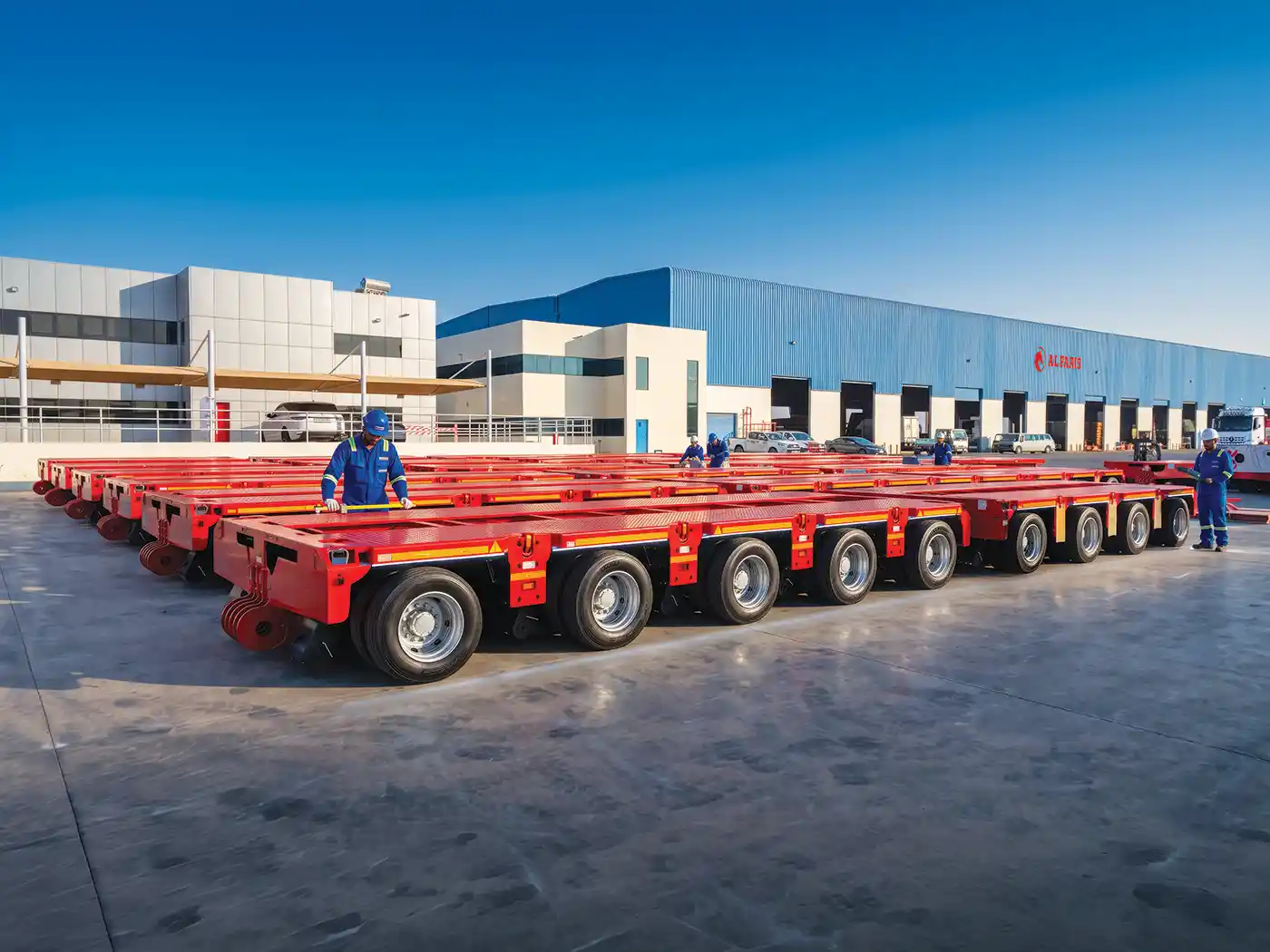
Dubai (PlantAndEquipment.com) - Most fleet expansions are about meeting today’s demand. Al Faris Group’s latest investment is a calculated move to prepare for what comes next.
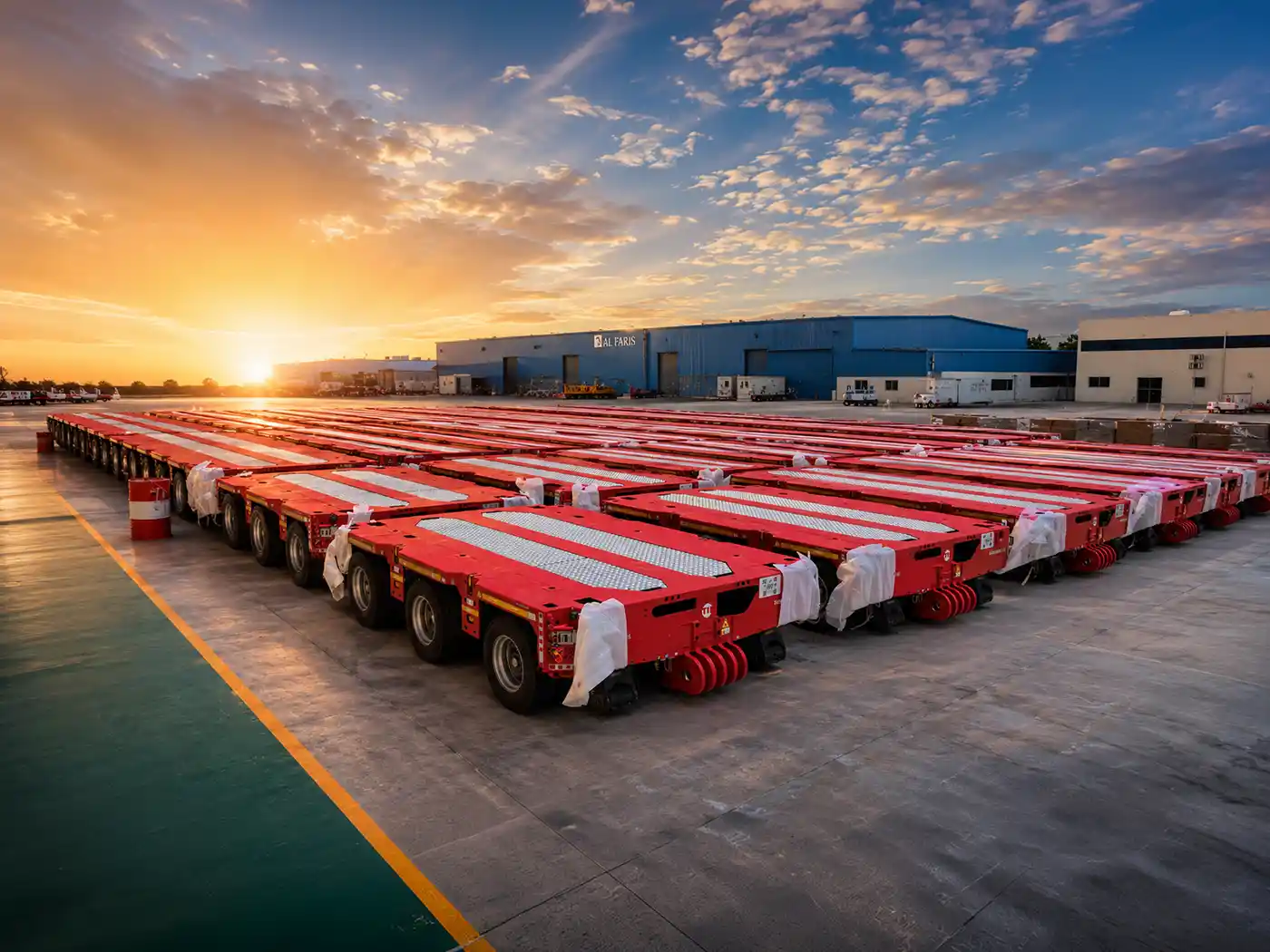
The company has taken delivery of 100 new hydraulic trailer axle lines, expanding its conventional fleet and taking its theoretical transport capacity beyond 16,000 tonnes. The scale of the addition reflects growing confidence in the pipeline of industrial, energy and infrastructure projects across the UAE, Saudi Arabia and the wider GCC.
The timing is deliberate.
Reading the market
The Middle East is not simply busy; it is being developed at a scale the region has rarely seen before. Giga developments, offshore fabrication yards, petrochemical and refinery expansions, transmission and grid upgrades, renewable energy plants and next-generation infrastructure are all moving into execution at the same time.
What has changed is not only the number of projects. It is also the shape of the cargo. Modules are heavier, fabrication is more consolidated, and clients are shifting more work into controlled yard environments before moving larger, fully built units to site in a single piece. Schedules are tighter, penalties are higher, and the tolerance for a delayed heavy move is close to zero.
For Al Faris Group, the decision to increase its fleet is based on that longer-term view of regional activity rather than the requirements of an individual project.
“We did not add 100 axle lines because we had a contract to fill,” says Gagan Shetty, Group General Manager – Sales & Marketing at Al Faris Group. “We added them because of what we are seeing in the market pipeline across the UAE, Saudi Arabia and the wider GCC — and because we believe in it.”
That pipeline is creating pressure on one factor above all: availability. When several major projects require hydraulic trailers within the same period, capability on paper means very little. Equipment must be available in the required configuration, at the required time and with the engineering expertise to support it.
“In our business, the client’s real question is not simply ‘do you have the equipment?’” says Shetty. “It is ‘will you have it available on my date, in my configuration, with your engineering team behind it?’”
The distinction is an important one in a market where multiple major projects can move into critical execution phases simultaneously. Fleet size may establish capability, but availability ultimately determines whether that capability can be put to work.
“Every conversation I have with EPC contractors and project owners today comes back to that point,” says Shetty. “Capacity that is committed elsewhere is not capacity. This investment is our answer to that question, made in advance rather than in reaction.”
Beyond tonnage
Axle lines are the visible part of a heavy transport operation. They are rarely the most difficult part.
Every movement begins long before the cargo starts rolling, with load distribution and centre-of-gravity analysis, axle-line configuration, route surveys, bridge assessments, ground-bearing calculations, swept-path simulations, utility coordination and authority approvals. It is engineering discipline, executed under schedule pressure, that determines whether a move is routine or becomes a crisis.
This is where the expanded fleet creates its real value. Combined with Al Faris Group’s in-house engineering team, integrated heavy lifting capability and project management, the additional axle lines allow the company to support projects across the transport journey, from feasibility studies and route engineering through to final positioning.
The scope of those movements can be extensive: refinery reactors, offshore modules, transformers, bridge girders and fabricated structures weighing thousands of tonnes. For projects at this scale, the number of axle lines is only one element of the equation. Engineering, planning and coordination ultimately determine how effectively that capacity can be deployed.
The UAE’s development model has also played an important part in shaping that investment outlook.
“The UAE has built an environment where industry, logistics and infrastructure move together, and the wider region is following that model,” says Shetty. “When you see that level of long-term commitment from a market, you match it.”
For heavy transport companies, matching that development means building capacity before demand reaches its peak. The addition of 100 axle lines therefore gives Al Faris greater flexibility to configure equipment around individual project requirements while maintaining capacity as multiple large-scale projects progress simultaneously across the region.
That makes the investment as much about confidence in the project pipeline as it is about expanding the physical fleet.
“That is what these 100 axle lines represent — our trust in this region’s growth, backed by capital, not by a press release,” says Shetty.
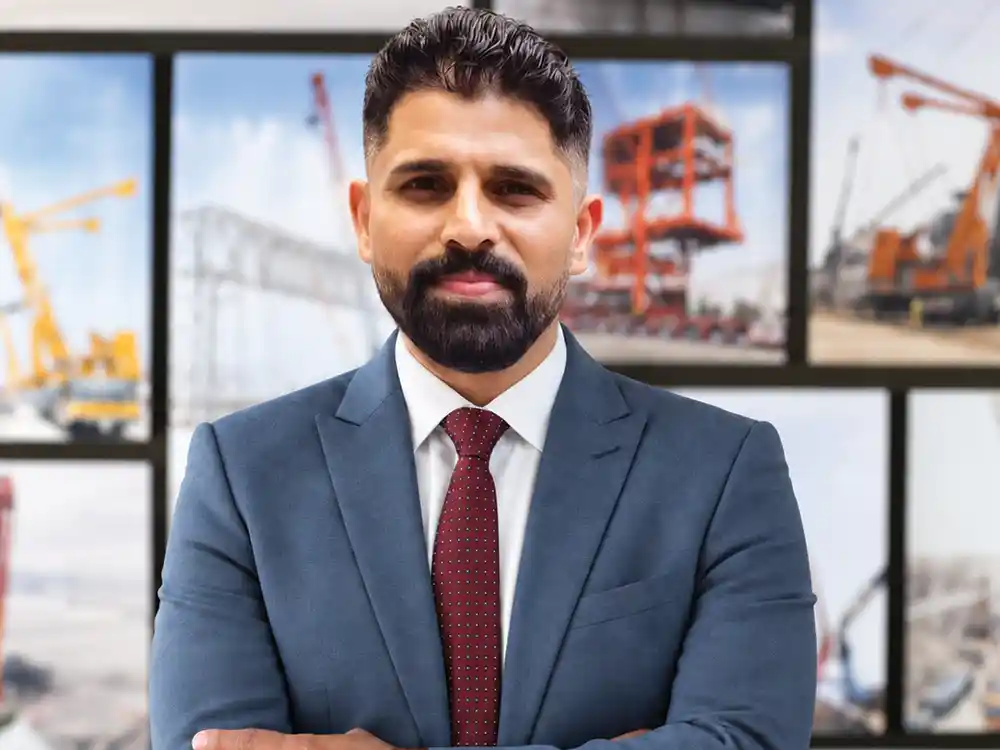
Gagan Shetty, Group General Manager – Sales & Marketing at Al Faris Group.
Investing ahead of demand
The expansion reflects a wider change in how heavy transport providers are preparing for the GCC project pipeline. With industrial, energy and infrastructure developments progressing concurrently, operators are increasingly required to position capacity before projects reach their critical transport phases rather than respond once demand has already materialized.
For Al Faris Group, the expanded conventional hydraulic trailer fleet sits alongside its SPMT operations, heavy lifting capabilities, jacking and skidding systems, gantry solutions and specialized engineering expertise. Together, these capabilities position the company to support increasingly complex industrial and infrastructure movements across the GCC.
The significance of the latest investment, however, lies as much in its timing as in its scale. Adding 100 axle lines without tying the expansion to a single contract is a commitment to anticipated regional demand and to having capacity available when projects require it.
In heavy transport, where a delayed movement can affect an entire project schedule, owning equipment is only the starting point. The greater challenge is having the right configuration, engineering capability and capacity available at precisely the moment it is needed.
For Al Faris Group, 100 new axle lines are a substantial addition to the fleet. More importantly, they represent a bet on what comes next for the region.