

2026 ALFAMIX Wet Mix Macadam Plant (PMT)
نظرة عامة
 الإبلاغ عن مشكلة مع الإعلان
 إرشادات السلامة
الوصف
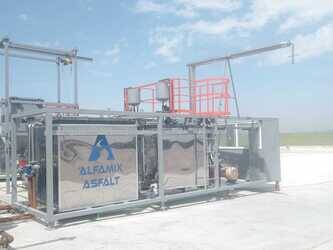
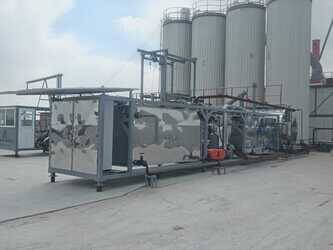
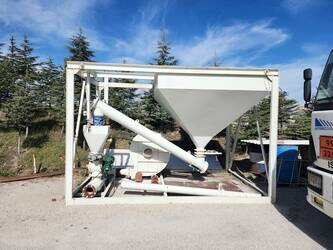
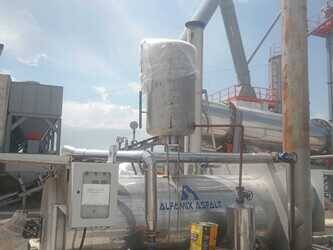
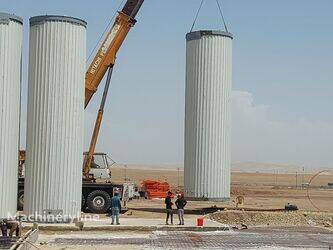
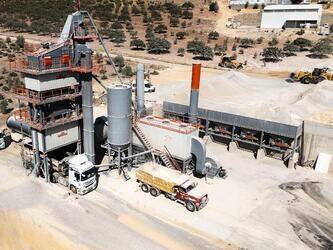
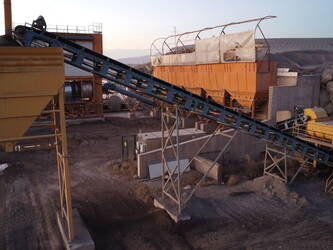
ALFAMIX Mechanical Stabilization Plant – Plant Mix Facility with a Capacity of 300–600 Tonnes/Hour The ALFAMIX Mechanical Stabilization Plant has been developed for the high-capacity, homogeneous preparation of mixtures required for road construction, base and sub-base applications. Manufactured in a capacity range of 300–600 tonnes/hour, our plants offer solutions suited to your projects with a twin-shaft continuous mixer, a precise aggregate dosing system and modular bins that can be configured to meet your needs. With semi-automatic or fully automatic operating options, the plant's production arrangement is determined according to your business's capacity targets, the aggregate fractions to be used and site conditions. Technical feature Description Production capacity 300–600 tonnes/hour, depending on the model Production system Continuous mixing Mixer Twin-shaft Shaft synchronization Synchronization gears Mixer internal lining Ni-Hard 4 cast wear plates Aggregate bin options 3, 4, 5 or 6 compartments Modular bin combinations 2+2, 3+2 or 3+3 Standard bin compartment volume 15 m³ per compartment Optional bin compartment volumes 20, 25 or 30 m³ per compartment Aggregate dosing Variable-frequency-drive-controlled dosing belts Weighed feeding Optional belt scales Operating options Semi-automatic or fully automatic The twin-shaft continuous mixer at the heart of the plant ensures consistent mixing of the material throughout production. The shafts, connected by synchronization gears, move in coordination to help achieve a homogeneous mixture. The mixer's internal surfaces are protected against aggregate abrasion by Ni-Hard 4 cast wear plates. This construction helps protect the mixer body and supports long-term use under intensive operating conditions. The modular aggregate bins can be configured according to the types of material to be used. In addition to the 3-compartment bin option, feeding groups can be arranged with 4 compartments in a 2+2 combination, 5 compartments in a 3+2 combination and 6 compartments in a 3+3 combination. Each bin compartment is manufactured with a standard volume of 15 m³; 20, 25 and 30 m³ options are available for greater storage requirements. For example, a standard 4-compartment bin group provides a total aggregate storage volume of 60 m³, while a 6-compartment configuration with 30 m³ per compartment can provide a total of 180 m³. The belts with raised sidewalls used on the bin dosing conveyors help prevent material from spilling over the sides. Controlling each dosing belt with a variable frequency drive enables different aggregate fractions to be fed in the required proportions and dosed to suit the production capacity. The dosing motors are equipped with external cooling fans. This ensures effective motor cooling even when operating at low speeds. Material flow monitoring and belt-break safety sensors on the dosing belts help monitor the feeding system. Electric vibrators fitted to 2 designated bin compartments support continuous feeding, particularly for materials that are difficult to discharge. Optional belt scales enable the quantity of aggregate fed to be monitored by weight. With the weighed feeding option, material flow can be regulated with greater control according to the target production capacity and mix proportions. The aggregate collecting conveyor brings the dosed materials together and transfers them to the inclined feeding conveyor. The inclined conveyor delivers the material to the continuous mixer. Safety pull cords, emergency-stop equipment and roller systems that help maintain belt alignment on both conveyors support safe and consistent material handling. The plant is offered for semi-automatic or fully automatic operation according to the operator's preference. Aggregate feeding, conveyors and mixing operations are managed in coordination through the selected control system. Information from the sensors makes it easier to monitor the production process and safety functions. Let us configure a mechanical stabilization plant suited to your project together with ALFAMIX. Contact us about production capacity, the number of bin compartments, storage volume per compartment, belt scale and automation options; we will prepare a technical proposal suited to your site and production targets.
ALFAMIX Mechanical Stabilization Plant – Plant Mix Facility with a Capacity of 300–600 Tonnes/Hour The ALFAMIX Mechanical Stabilization Plant has been developed for the high-capacity, homogeneous preparation of mixtures required for road construction, base and sub-base applications. Manufactured in a capacity range of 300–600 tonnes/hour, our plants offer solutions suited to your projects with a twin-shaft continuous mixer, a precise aggregate dosing system and modular bins that can be configured to meet your needs. With semi-automatic or fully automatic operating options, the plant's production arrangement is determined according to your business's capacity targets, the aggregate fractions to be used and site conditions. Technical feature Description Production capacity 300–600 tonnes/hour, depending on the model Production system Continuous mixing Mixer Twin-shaft Shaft synchronization Synchronization gears Mixer internal lining Ni-Hard 4 cast wear plates Aggregate bin options 3, 4, 5 or 6 compartments Modular bin combinations 2+2, 3+2 or 3+3 Standard bin compartment volume 15 m³ per compartment Optional bin compartment volumes 20, 25 or 30 m³ per compartment Aggregate dosing Variable-frequency-drive-controlled dosing belts Weighed feeding Optional belt scales Operating options Semi-automatic or fully automatic The twin-shaft continuous mixer at the heart of the plant ensures consistent mixing of the material throughout production. The shafts, connected by synchronization gears, move in coordination to help achieve a homogeneous mixture. The mixer's internal surfaces are protected against aggregate abrasion by Ni-Hard 4 cast wear plates. This construction helps protect the mixer body and supports long-term use under intensive operating conditions. The modular aggregate bins can be configured according to the types of material to be used. In addition to the 3-compartment bin option, feeding groups can be arranged with 4 compartments in a 2+2 combination, 5 compartments in a 3+2 combination and 6 compartments in a 3+3 combination. Each bin compartment is manufactured with a standard volume of 15 m³; 20, 25 and 30 m³ options are available for greater storage requirements. For example, a standard 4-compartment bin group provides a total aggregate storage volume of 60 m³, while a 6-compartment configuration with 30 m³ per compartment can provide a total of 180 m³. The belts with raised sidewalls used on the bin dosing conveyors help prevent material from spilling over the sides. Controlling each dosing belt with a variable frequency drive enables different aggregate fractions to be fed in the required proportions and dosed to suit the production capacity. The dosing motors are equipped with external cooling fans. This ensures effective motor cooling even when operating at low speeds. Material flow monitoring and belt-break safety sensors on the dosing belts help monitor the feeding system. Electric vibrators fitted to 2 designated bin compartments support continuous feeding, particularly for materials that are difficult to discharge. Optional belt scales enable the quantity of aggregate fed to be monitored by weight. With the weighed feeding option, material flow can be regulated with greater control according to the target production capacity and mix proportions. The aggregate collecting conveyor brings the dosed materials together and transfers them to the inclined feeding conveyor. The inclined conveyor delivers the material to the continuous mixer. Safety pull cords, emergency-stop equipment and roller systems that help maintain belt alignment on both conveyors support safe and consistent material handling. The plant is offered for semi-automatic or fully automatic operation according to the operator's preference. Aggregate feeding, conveyors and mixing operations are managed in coordination through the selected control system. Information from the sensors makes it easier to monitor the production process and safety functions. Let us configure a mechanical stabilization plant suited to your project together with ALFAMIX. Contact us about production capacity, the number of bin compartments, storage volume per compartment, belt scale and automation options; we will prepare a technical proposal suited to your site and production targets.